
Economic Crisis Is Here.
Survival Guide for Small Businesses.
Oil prices have surged past $100 a barrel. Supply chains are fractured. Customers are watching every dollar. But the local businesses that will survive and thrive already know something the rest don't.
$100+
Brent Crude Per Barrel
25%
Global Oil Price Surge Since Conflict Began
42%
Restaurant Operators Not Profitable in 2026
5-25×
Cheaper to Keep a Customer Than Find a New One
Right now, the world is watching the Strait of Hormuz, a narrow neck of water through which nearly a fifth of the planet's oil supply normally flows. With conflict escalating across the Iran-Gulf region, that flow has been severely disrupted. Energy markets are in shock. And the ripple effect is already landing on your doorstep, literally.
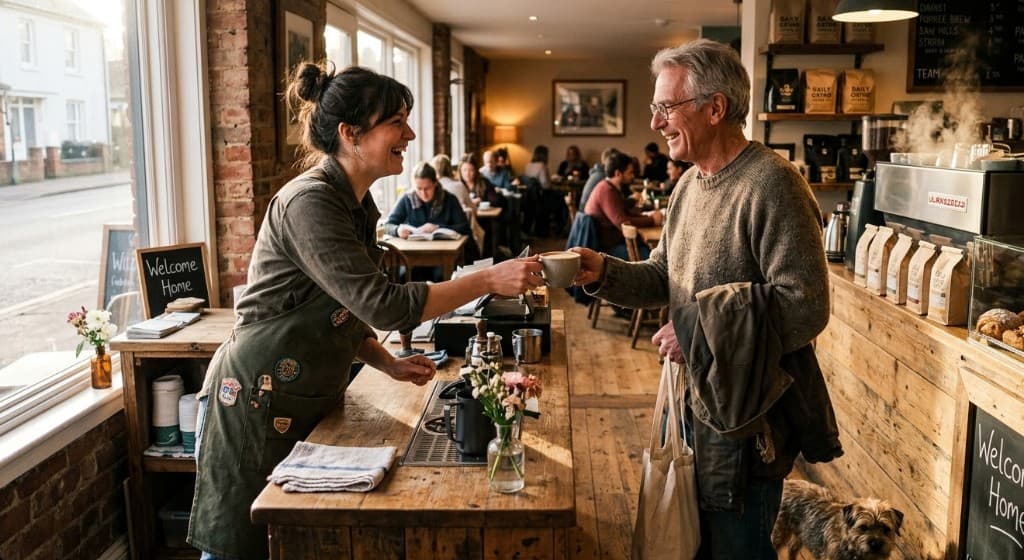
If you run a café, a restaurant, a neighbourhood bakery, a juice bar, or any small local business with a loyal customer base, this article is written for you. Not to alarm you, but to arm you.
Because here's what separates the businesses that close during a downturn from the ones that come out the other side stronger: the depth of the relationships they built before things got hard.
Part OneWhat's Actually Happening, And Why Your Costs Are About to Bite
Let's call it what it is. On February 28, 2026, a coordinated US-Israeli military campaign targeting Iran's military infrastructure triggered a chain reaction that is reshaping global energy markets in real time. According to the IEA's March 2026 Oil Market Report, Brent crude futures surged, trading within striking distance of $120/bbl as tanker traffic through the Strait of Hormuz ground to a near-halt. Wikipedia's economic impact summary confirms this is the largest supply disruption in the history of the global oil market, with roughly 20 million barrels per day of crude exports disrupted and Gulf countries cutting production by at least 10 mb/d.
As Al Jazeera reports, the IMF's own analysis shows that every 10% rise in oil prices triggers a 0.4% rise in inflation and a 0.15% reduction in economic growth, and with prices up 25%+ from pre-conflict levels, that arithmetic is already playing out in every supply chain on the planet.
The human impact at street level is equally stark. Fortune Magazine reports that US petrol prices climbed to an average of $3.48 per gallon, up from $2.98 before the conflict, a 17% jump in days. California drivers hit $5.20 per gallon. And as PBS NewsHour explains, fuel surcharges from shipping companies are rising simultaneously, pushing up the cost of virtually everything that needs to travel, including every ingredient heading to your kitchen.
⚡ What This Means for Your Business
As Al Jazeera's food cost analysis makes clear: oil prices and food prices move in lockstep. Energy touches every stage of the food supply chain, from the fertilisers used in the fields to the trucks that carry produce to your supplier's warehouse to the van that makes your delivery. Your electricity bill, packaging, cleaning supplies, and imported ingredients are all subject to the same pressure. This isn't speculation. It's already happening.
Consumers are feeling it just as acutely. The Hill warns that a prolonged conflict could pull the US into recession, with economists already flagging affordability concerns for ordinary households. Meanwhile, Nation's Restaurant News cites Technomic research showing that when petrol hits $4+ per gallon nationally, nearly 90% of consumers are impacted and actively spend less on food and services to compensate, a direct threat to your daily foot traffic.
3-4%
Projected dining-out inflation through 2026, per USDA projections via Barmetrix, before the Gulf crisis is fully priced in
30%+
Rise in menu prices since 2020 just to maintain a 5% pre-tax margin, per the National Restaurant Association
42%
Restaurant operators not profitable in 2026, per the NRA State of the Industry Report
This is the environment you're operating in. Now let's talk about what you can actually do about it.
Part TwoStop Selling a Product. Start Selling Belonging.
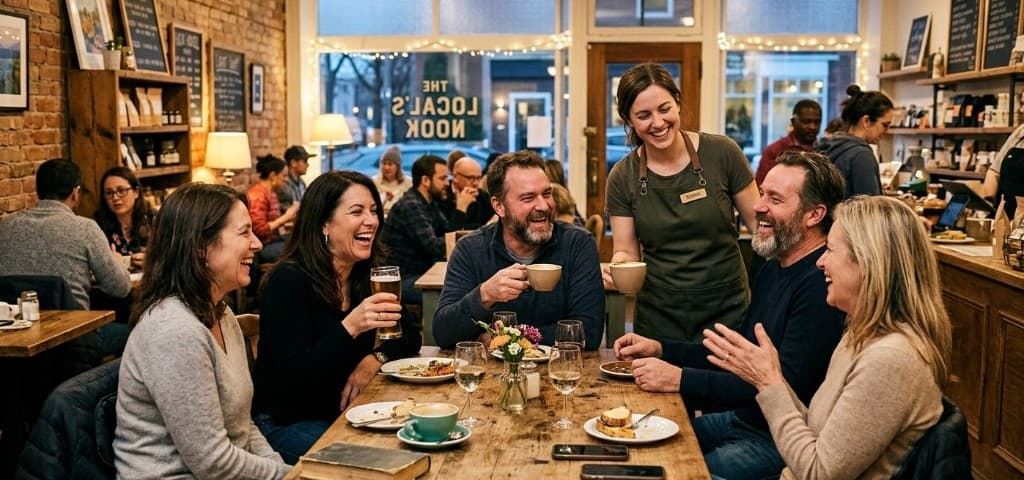
Here's the uncomfortable truth that most business owners won't face until it's too late: when money gets tight, customers don't just spend less, they get selective. They don't stop going to cafés or restaurants entirely. They pick one or two they truly love and cut everyone else out. Barmetrix's restaurant inflation research confirms the pattern: people are still dining out, but they're trimming extras (skipping drinks, sharing desserts, choosing mid-priced mains) while remaining loyal to the places they feel most connected to.
The question you need to be asking right now isn't "how do I attract new customers?" It's: "Am I the business my regulars would never give up?"
This begins with something deceptively simple, making people feel like they belong there. Not like they're visiting a transaction point, but like they're coming home.
Know Their Name. Know Their Order. Know Their Story.
According to Keywords Everywhere's retention research, a Microsoft study found that 96% of consumers believe customer service is crucial to their loyalty to a brand, and 56% have actively left a business due to poor service. Yet most small businesses underinvest here precisely when it costs them the most, during a downturn.
Training your team to remember regular customers' names and usual orders isn't just nice, it's commercially strategic. It creates micro-moments of connection that no big chain competitor can replicate at scale. A customer who is greeted by name, whose double-oat-milk-latte is already being made when they walk in, that customer has switched from being a buyer to being a regular. And regulars are the currency your business runs on. As TrueLoyal's loyalty statistics confirm, 65% of a company's revenue comes from the repeat business of existing customers.
Build Your Space as a Third Place
The sociologist Ray Oldenburg coined the term "third place", the spaces beyond home and work where community forms. The local pub. The neighbourhood café. The corner bakery. These places don't just sell products; they sell the feeling of being somewhere that belongs to you.
Audit your space honestly: Does your café feel like somewhere people want to linger? Do you know your regulars' names? Do you ask how their week went? Do your staff feel empowered to have genuine conversations? These are not soft skills, they're survival skills.
"It's 5 to 25 times more expensive to acquire a new customer than to keep an existing one. In a cost-squeeze environment, retention isn't just smart, it's arithmetic."
Harvard Business Review, cited in TrueLoyal loyalty statisticsPart ThreeRaise Your Quality Before You Raise Your Prices
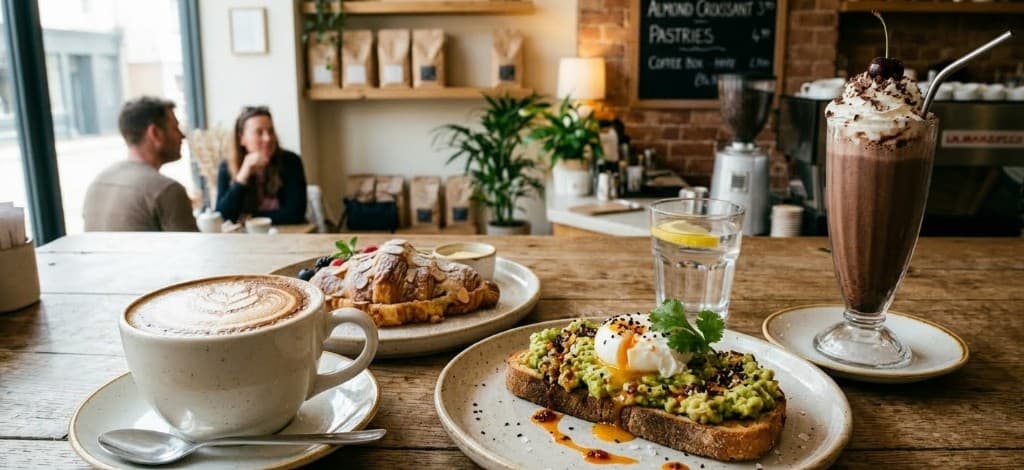
Before you even think about menu price increases, and you will need to think about them, ask yourself honestly: Is there anywhere in your product quality, presentation, or service that you could improve without significant cost?
Consumers who are becoming more price-conscious are not just looking for cheap. They're looking for worth it. Digital Silk's loyalty research finds that 88% of satisfied customers prefer their chosen brand over competitors, even when cheaper options exist, provided they trust the quality. They are absolutely willing to pay more, but only if they feel the experience justifies it. As Toast's food price trends analysis notes, the pattern is clear: people still dine out, but they expect more in return for every dollar they spend.
Practical Quality Wins (Often Low-Cost)
- →Review your plating and presentation, small tweaks to how food looks create disproportionate perceived value.
- →Audit your coffee or signature drink offering, is it as good as it could be? Quality beans and proper training often cost less than you think.
- →Tighten your service script, warmth, speed, personalisation, and attentiveness cost nothing extra but change everything.
- →Declutter your menu, fewer, better items are cheaper to produce and create stronger brand identity.
- →Improve your space's atmosphere, lighting, music, cleanliness, and small details signal care and justify price.
- →Source one or two genuinely local or premium ingredients and tell the story: provenance creates emotional value.
Customers who understand why something costs what it costs, and who feel the quality backs it up, are the customers who stick around when prices inevitably climb.
Part FourThe Price Hike Conversation You're Going to Have to Have
Let's be blunt: you're going to need to raise your prices. If you haven't already, you will. WXYZ Detroit's supply chain reporting captures what small business owners already know: most are absorbing surcharge costs as long as they possibly can, but there is a limit. The supply chain pressures cascading from the Gulf conflict, layered on top of already-elevated post-pandemic operational costs, ultimately leave no alternative. Pretending otherwise is not a strategy, it's a path to closing.
But how you raise prices matters enormously. There's a world of difference between customers who feel blindsided by a 30% jump on their usual order, and customers who feel like a trusted local business has been honest with them about cost realities and is doing everything it can to reward their loyalty.
Be Transparent, Be Human
Customers are more sophisticated and empathetic than most business owners give them credit for. They read the news. They fill their own fuel tanks. They know what's happening in the world. A short, sincere note, on a chalkboard, a table card, your social media, or your email list, explaining that global supply pressures are pushing costs up, but that you're working hard to keep things as accessible as possible and to reward your loyal customers, goes an enormous way. Digital Silk finds that 95% of customers are more inclined to stay loyal to brands they trust, and trust, once built, is remarkably durable even through price increases.
🗣 What to Say (A Framework)
"You may have noticed prices have moved a little. Like most businesses, we're navigating higher ingredient and energy costs right now, partly driven by what's happening in global energy markets. We've done our best to absorb as much as we can and hold off for as long as possible. To thank you for sticking with us, we're doubling down on [loyalty rewards / quality / personal service]. We're not going anywhere, and we hope you aren't either."
That kind of honesty builds trust. And trust, in a tough market, is worth more than any discount.
Part FiveThe Secret Weapon: A Customer Loyalty Programme That Actually Works
This is where the rubber truly meets the road. You can have the warmest service, the best coffee, and the most honest pricing conversation in the world, but if you have no systematic way to reward your regulars, re-engage lapsed customers, and convert first-timers into loyalists, you're leaving your most valuable asset entirely to chance.
A loyalty programme, done right, is not a gimmick. The data is unambiguous:
81%
of loyalty program owners said their program was helpful during an economic downturn, per Queue-it 2026
4.8×
average ROI reported, 90% of owners saw positive returns, per Queue-it 2026
3.1×
more annual spend from members who redeem rewards vs. those who don't, per Queue-it 2026
According to StampMe's loyalty ROI research, loyal members generate 12–18% more incremental revenue growth per year than non-members. And Capital One Shopping's loyalty statistics show that 85% of consumers say a loyalty programme makes them more likely to continue shopping with a brand, even when prices go up. The same research finds that 77% of gamified loyalty program users are more likely to participate, and programmes with gamification retain 87% more customers than those without.
That last set of figures is the one that matters most right now. A customer with points on the line, a birthday offer coming, or a reward just within reach, that customer has a concrete reason to choose you over the competitor down the street, even if your prices are higher.
The Paper Stamp Card Problem
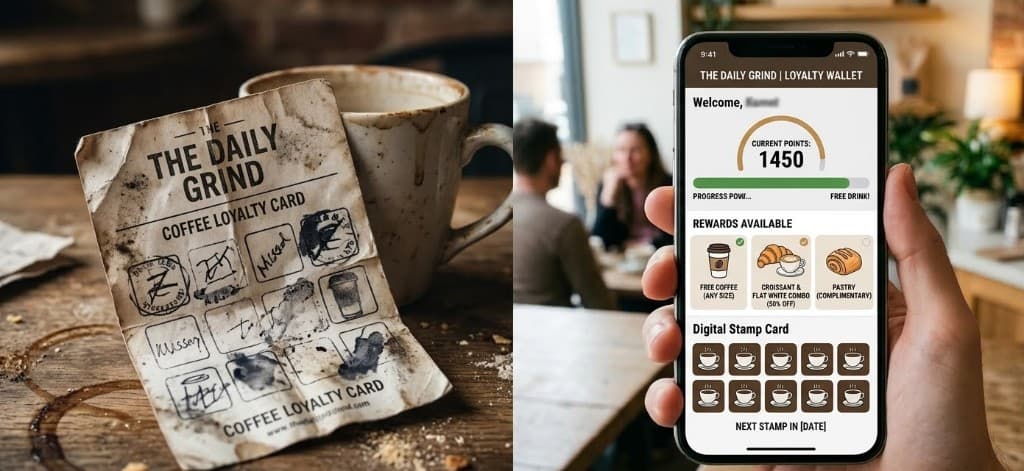
Most small businesses that have tried loyalty programmes know this scenario intimately: you design a little card, get it printed, hand them out to customers. Some people get excited. Then life happens. The card goes in a junk drawer. It gets washed in a pocket. It's left at home on the one day the customer is in town. The stamp is lost. They start again, begrudgingly. They stop coming in entirely because the programme feels like more hassle than it's worth.
Paper stamp cards have three fatal flaws in 2026: they create friction, they give you zero data, and they disappear. You have no idea who your regulars are, when they last visited, or how close they are to churning. You're flying completely blind.
| Capability | Paper Stamp Card | Smart Digital Programme |
|---|---|---|
| Customer remembers to bring it | ❌ Rarely | ✅ Always (it's their phone) |
| You know who your regulars are | ❌ No data at all | ✅ Full customer profiles |
| Reach lapsed customers | ❌ Impossible | ✅ Automated win-back offers |
| Send birthday offers | ❌ No | ✅ Automated & personalised |
| Convert new customers to regulars | ❌ Hope & pray | ✅ Viral coupons & referrals |
| Requires staff to physically stamp | ❌ Yes, every time | ✅ Automated stamp award |
| Gamification & engagement | ❌ None | ✅ Points, badges, rewards |
| Customer needs to install an app | N/A | ✅ No install needed, web wallet |
✦ Platform Spotlight
Meet LOYO, The Business Transformation Engine Built for Times Exactly Like This
If you're going to invest in a loyalty programme, do it properly. LOYO (loyoloyalty.com) isn't a digital version of a stamp card. It's a complete customer relationship engine, built specifically for small businesses who want enterprise-level loyalty capabilities without enterprise complexity or cost.
Birthday & Win-Back Offers
Automatically send personalised birthday offers and win-back promotions to customers who've gone quiet. Bring them back before they're gone for good.
Viral Coupons
Link shareable coupons to your stamp card programme, turning your regulars into recruiters and converting first-time visitors into loyal ones.
Automated Stamp Awards
No physical stamping required. Stamps are awarded automatically, reducing friction at point-of-sale and freeing up your team to focus on the customer in front of them.
Referral Programme
Your loyal customers become your best marketers. The referral system rewards them for bringing friends, and can earn you up to 50% off your subscription fees.
No App Download Required
Customers simply access their digital wallet via a web app, no download, no friction, no barrier. Just instant access to their rewards and loyalty status.
Built-in Gamification
Customers earn LOYN engagement points (redeemable for LOYO-sponsored gift cards) and unlock badges, making loyalty genuinely fun and motivating to participate in.
The promotions system lets you send targeted campaigns, birthday offers, seasonal deals, win-back sequences for lapsed customers, and exclusive rewards for your top spenders. All with a level of automation that means your loyalty programme runs itself, rather than running you.
This is the difference between loyalty as a chore and loyalty as a growth engine.
Start Your 30-Day Free TrialNo credit card required · Full access from day one · Nothing to lose, everything to gainPart SixYour 90-Day Action Plan: What to Do Starting Now
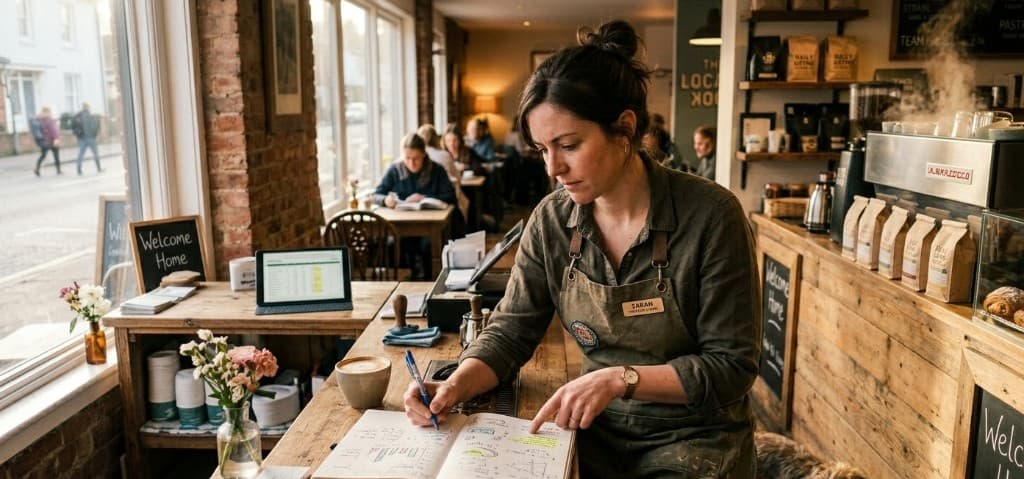
Let's bring it all together with a concrete, actionable roadmap. You don't need to do all of this at once, but you need to start now.
Month One: Fortify the Foundation
- →Audit your customer service: Spend a week observing your team's interactions with regulars. Where are the warmth gaps? Where can connection be deepened?
- →Train your team on regulars: Create a simple internal system to remember names, orders, and personal details for your top 20 most frequent customers.
- →Review your quality: Pick two or three concrete improvements to your product or presentation you can make this month without significant cost increase.
- →Sign up for LOYO's free trial: Get the platform running, set up your digital loyalty wallet, and begin enrolling existing customers.
Month Two: Build the Loyalty Engine
- →Launch your digital loyalty programme: Make it easy for every customer who visits to join, QR codes, verbal invitations, counter signage.
- →Set up your automated campaigns: Configure birthday offers, and identify which customers haven't visited in 30+ days for a win-back sequence.
- →Create your first viral coupon: Design a referral offer that rewards existing customers for bringing someone new in.
- →Communicate your price transparency: Craft your honest message about cost increases and how you're rewarding loyalty in response.
Month Three: Compound the Gains
- →Analyse your loyalty data: Who are your top customers? Who's at risk of lapsing? What's your most popular reward? Use the data to make smarter decisions.
- →Activate your referral programme: Actively promote it to your best customers, they're your most credible word-of-mouth channel.
- →Run a seasonal promotion: Use LOYO's promotions system to create a limited-time offer that drives visits during your typically slower periods.
- →Assess and adjust: Review what's working, double down on it, and keep refining your approach as the economic situation evolves.
The Bottom LineTough Times Are Loyalty's Greatest Test, And Greatest Opportunity
The global picture right now is genuinely difficult. The Iran-Gulf conflict has disrupted energy markets in ways that will take months, possibly longer, to fully resolve. Oil at $100+ per barrel sends shockwaves through every supply chain that touches your business. Customers are feeling it in their fuel tanks, their grocery bills, and their discretionary spending budgets.
But here's what history consistently shows: the local businesses that invest in genuine customer relationships before and during economic downturns are the ones that emerge from them with a stronger, more loyal base than they had going in.
Because when people are forced to make choices, they choose the places where they feel seen, valued, and rewarded. They choose the places that feel like home.
The tools to build that kind of relationship, authentically, systematically, and at scale, are available to you right now. The question is whether you'll use them before the storm hits hardest, or wait until customers have already walked away.
"A 5% increase in customer retention can drive profit growth of up to 95%. In a margin-squeezed environment, retention isn't just strategy, it's survival."
Bain & CompanyYou've built something. You've put your name above a door, created a space that people choose to spend their time in, and served your community. Don't let a global crisis undo that. Build the relationships. Earn the loyalty. And give your customers a reason, a concrete, rewarding, gamified, personalised reason, to keep choosing you.
The storm is here. But so is the blueprint for getting through it.
Frequently Asked QuestionsWhat Business Owners Are Asking Right Now
These are the questions being typed into Google every day by small business owners trying to make sense of what's happening. Here are straight answers.
How much will the Iran-Gulf conflict actually push up fuel prices?+
Significantly, and potentially for a long time. The IEA has confirmed this is the largest oil supply disruption in the history of global energy markets, with nearly 20 million barrels per day of Gulf exports halted. Brent crude briefly touched $120/barrel before easing back to around $92 at the time of writing.
Euronews reports that Iran's Revolutionary Guard has threatened prices could reach $200/barrel if strikes continue; analysts consider this the extreme scenario, but sustained prices of $90–$120 are already considered the realistic baseline as long as Strait of Hormuz shipping remains disrupted.
For small businesses, the key variable is duration. PBS NewsHour quotes economists: a few weeks means modest impact; months means broad price increases across the food supply chain.
Will there be food shortages at restaurants and cafés because of the oil crisis?+
Outright shortages of common staples are unlikely in most Western markets in the short term, but supply disruptions and cost increases are already materialising. Al Jazeera's food cost analysis explains that oil is embedded throughout the food supply chain. In regions more dependent on Gulf energy imports, the risk of operational disruptions is very real.
The more universal threat for Western businesses is cost escalation rather than physical shortage, but supply chain unpredictability for imported ingredients, packaging, and specialty goods is likely to increase as the conflict continues.
How much will my restaurant or café ingredient costs go up?+
Costs were already rising before the Gulf conflict. USDA projections via Barmetrix had dining-out inflation tracking at 3–4% for 2026 in a pre-crisis scenario. The Gulf conflict adds a significant layer on top of that baseline.
PBS NewsHour's reporting cites food economists noting that oil price shocks don't hit shelves or supplier invoices overnight; typically there's a 4–8 week lag. USDA research shows that rising diesel prices push up the cost of fresh produce measurably. Bottom line: budget for 8–15% ingredient cost increases over the coming months if the conflict persists.
Should I raise my menu prices now or wait?+
Don't wait so long that you're forced into a sudden, large jump; that's the scenario that damages customer relationships most. The better approach, supported by Toast's restaurant cost guidance, is to raise prices selectively and incrementally, while communicating your rationale honestly.
Pair any price move with a loyalty programme or enhanced customer service so customers have a concrete reason to feel the increase is fair and to feel rewarded for their continued patronage.
Will customers stop coming to local cafés and restaurants because of high fuel prices?+
Not entirely; they will become more selective. Nation's Restaurant News cites Technomic research showing that when petrol hits $4+ per gallon nationally, nearly 90% of consumers cut back on discretionary food and service spending. They consolidate: they go to fewer places, more regularly.
This is a significant opportunity for local businesses with strong customer relationships. When consumers trim their list to the places they truly value, businesses that invested in connection, quality, and loyalty rewards are the ones that make the cut.
Do loyalty programs actually work for small cafés and restaurants?+
Yes. Queue-it's 2026 loyalty statistics show that 90% of loyalty program owners report positive ROI, with an average return of 4.8× investment. Members who actively redeem rewards spend 3.1× more annually than those who don't.
For small businesses specifically, StampMe's small business loyalty research finds that loyalty members contribute up to 18% more revenue annually versus non-members. Capital One Shopping's research finds that 84% of consumers say loyalty programs impact their decision to keep shopping with a business.
What's the difference between a paper stamp card and a digital loyalty programme?+
Paper stamp cards fail because of friction: customers forget them, lose them, and they give you zero data on who your regulars are or when they last visited.
A proper digital loyalty platform like LOYO gives you full customer profiles, automated birthday and win-back campaigns, viral coupon tools, referral programmes, and real analytics, all in a web-based wallet that requires no app download. The automation of awarding stamps removes the friction that kills paper programmes.
How can I attract new customers when everyone is tightening their belts?+
The most cost-effective new customer acquisition strategy in a downturn is referral: activating your existing loyal customers to bring their network to you. TrueLoyal's research finds that 70% of consumers are more likely to recommend a brand with a strong loyalty programme, and word-of-mouth referrals carry far more weight than paid advertising when trust in brands is lower.
Platforms like LOYO have this built in, including viral coupons linked to stamp cards designed to convert first-time visitors into ongoing members.
How long will the fuel price increases last?+
The answer depends almost entirely on the duration and outcome of the Iran-Gulf conflict. CSIS's energy analysis is direct: normalising oil prices requires resumption of normal seaborne exports from the Mideast Gulf, which requires either a ceasefire or the neutralisation of Iran's ability to disrupt shipping.
Al Jazeera's market analysis notes that even if the conflict ended quickly, damaged facilities and disrupted logistics could keep prices elevated for weeks or months. Business owners should plan for a sustained period of elevated costs rather than a rapid return to pre-conflict pricing.
What is LOYO and is it right for my small business?+
LOYO (loyoloyalty.com) is a digital loyalty and customer retention platform built specifically for small and medium businesses. It includes digital stamp programmes, automated birthday and promotional campaigns, win-back sequences for lapsed customers, viral coupons, referral programmes, built-in gamification with LOYN engagement points and badges, and customer analytics, all without requiring customers to download an app.
It's right for your business if: you have repeat customers you want to retain; you're facing cost pressures and want to give customers a concrete reason to stay loyal despite price increases; you're currently running (or considering) a paper stamp card; or you want to convert first-time visitors into long-term regulars.
LOYO offers a 30-day free trial with no credit card required, so there is genuinely nothing to lose by testing whether it works for your specific business and customer base.
Ready to Start? Try LOYO Free for 30 Days.
No credit card. No obligation. Just a smarter way to keep your customers coming back, even when times are tough.
Claim Your Free Trial at LOYO30-Day Free Trial · No Credit Card Required · Cancel Anytime